 EN
 GA
 DE
 ES
 FR
 IT
 PL
 PT


Contents
Recommendation
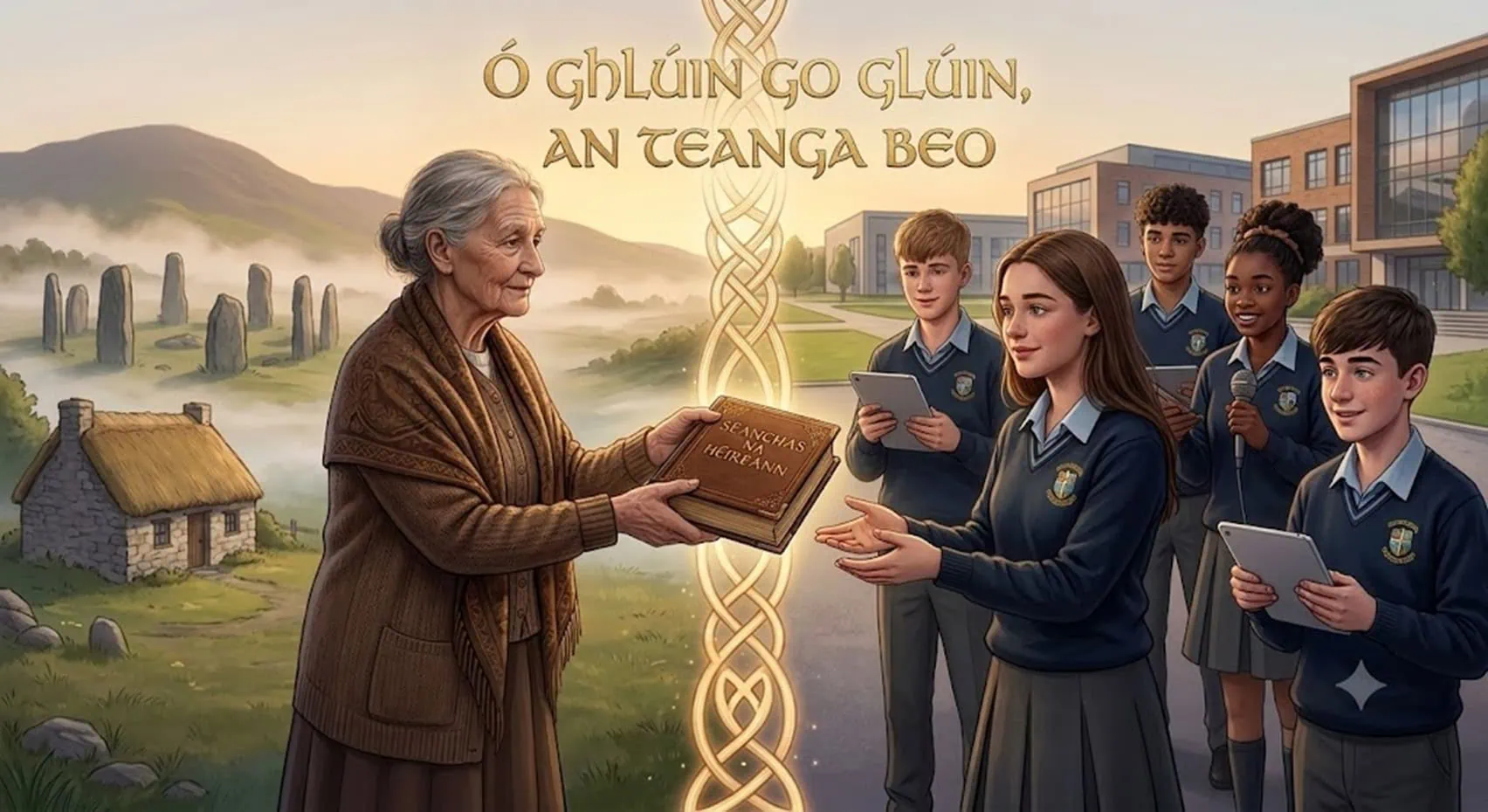
All English-medium primary schools should be required to provide an Irish-medium stream throughout all school years from Junior Infants to Sixth Class. The model should subsequently be extended to all English-medium post-primary schools.
The issue
Ireland is relatively unique amongst most English-speaking countries: the national language and first official language is Irish (Gaeilge), not English. Yet, only approximately 8% of all primary school pupils and around 4% of post-primary students attend an Irish-medium school (Gaeloideachas, 2022).
These figures are in stark contrast to the desired wishes of parents. Research carried out in 2013 in the Republic of Ireland found that some 23% of respondents would send their children (or would have sent their children) to an Irish-medium primary school and some 18% would send their children (or would have sent their children) to an Irish-medium post-primary school if one was located near their home (ESRI, 2015: 82).
The provision of Irish-medium education to primary school pupils and second-level students is clearly inadequate.
The proposal
All English-medium primary schools in Ireland should be required to offer their pupils the option to undertake their studies through the Irish language from the first year (Junior Infants). Under the proposal, pupils would attend either an Irish-medium stream or an English-medium stream to receive their education.
The Irish-medium stream would initially be introduced into the first two years of primary education: Junior Infants and Senior Infants. Each subsequent year, the Irish-medium stream would be made available to the new incoming Junior Infants cohort.
Research Findings
In April 2024, the author visited four English-medium primary schools, selected at random based on geographical spread and availability, and conducted a brief interview with the principal of each school. Two of the primary schools were co-educational, one was an all-boys school, and the other was an all-girls school. The interviews focused on the proposal that all English-medium primary schools in Ireland should be required to offer their pupils the option to undertake their primary school studies through Irish from the first year of primary school: Junior Infants.
There is a very small number of English-medium primary schools in Ireland that offer their pupils the option to receive their education through an Irish-language stream (sruth lán-Ghaeilge). Given that this model exemplifies the one proposed for all primary schools in Ireland, the author also conducted a short interview with the principal of an Irish- and English-medium co-educational primary school (principal 5) about their school’s experience of transitioning from being an all-English-medium primary school to now being an Irish- and English-medium school. The key findings from the interviews with the five principals are documented below.
Principal 1 – co-educational English-medium primary school I outside Dublin
The principal of the co-educational English-medium primary school informed the author that they have four Junior Infants classes (first year of primary school). She advised that there are a lot of parents in the area who would much prefer that their children attend a gaelscoil (Irish-medium primary school). However, as her area does not have one, the pupils have to settle with an English-medium school or travel to another town to attend an Irish-medium school. When the author explained the proposal of requiring English-medium primary schools to offer pupils the option to receive their education through the Irish language, the principal asked, “Why has nobody thought of this before?” She said, “I have the very staff to implement this… they are so enthusiastic about the Irish language”. She believes that the strategy could work and that there would be a lot of demand. When asked if she would have enough staff members with the necessary linguistic competences to teach through Irish, she replied, “we definitely have the expertise to offer a stream through Irish from Junior Infants [to Sixth Class – the final year of primary school]”. The principal told the author that she would discuss the proposal with some staff members.
Principal 2 – all-boys English-medium primary school outside Dublin
The principal of the all-boys English-medium primary school advised that as they only have two Junior Infants classes, the strategy would likely not work in his school as it would mean that 50% of the pupils would need to receive their education through Irish and the other 50% through English. He highlighted the demographics of his school as a further inhibiting factor. He advised that there are a lot of international students who need to learn English first. He further noted that an Irish-medium stream may not work for some pupils with Special Educational Needs (SEN). He also wondered how inclusive such a proposal would be if half the school were to receive their education through one language and the other half were to be taught through another. He did however note that if there were more Junior Infants classes, the proposal may work in his school. When asked if he believed he would have enough staff members with the necessary linguistic competences to teach through Irish, he replied “definitely”.
Principal 3 – all-girls English-medium primary school outside Dublin
The principal of the all-girls English-medium primary school informed the author that the area in which her school is situated is already served with Irish-medium schools. As such, the provision of an Irish-medium stream may not be needed in her school. However, she advised that she would be “very supportive of it [the proposal] in principle”. She said that she “could well see it working”. She further stated that “as a principal and as a professional, I would love it [to implement the strategy]”. When asked if she believes she would have enough staff members with the necessary linguistic competences to teach through Irish, she replied that for the junior years she would. However, she believes there would be a need for staff training so that they could build their confidence to teach through Irish. This would be particularly required for those teachers who would teach through the medium of Irish in the older age groups. The principal pointed out that the implementation of the initiative could be done with relative ease. She notes from previous experience from a separate strategy that these things seem “daunting at first”. However, she advises that “once embedded… people just adjust”.
Principal 4 – co-educational English-medium primary school II in Dublin
The principal of the second co-educational English-medium primary school does not believe there would be sufficient demand for an Irish-medium stream in his school as approximately 85% of their pupils are international. Many of these pupils also have English as an Additional Language (EAL) needs. The principal advised that if he were to offer an Irish-medium stream as a possibility, he believes it would be very difficult to obtain buy-in from parents given the demographics of his school, the English language needs of a large cohort of his pupils, and the fact that many of the parents would not be able to help their children if their tuition was through the Irish language.
When asked if he believed he would have enough staff members with the necessary linguistic competences to teach through Irish, he advised that there would only be around two teachers who would have the competence to teach through Irish. However, he noted that, although they would have the competence to teach through Irish, he would not be sure if teaching through Irish would be those teachers’ preference. He therefore stated that the “number one stumbling block [to implementing the proposal] would be getting teachers confident to teach through Irish”.
He noted some other potential impediments to adopting the proposal. He advised that there are teacher shortages in the country, saying, “it’s a teachers’ market right now”. As such, it could be very difficult to secure teachers qualified to teach through Irish. Moreover, if a teacher in the Irish-medium stream were absent, it would be very difficult to find substitute teachers who would have the necessary competence to be able to teach classes through the Irish language.
Although the initiative would likely not receive sufficient demand in his school, the principal stated that “I could definitely see it [the strategy] working well in other schools”. He continued, “I’d actually be all for it [the strategy] as a principal”. He believes that it is the “best age to expose them [the pupils] to it [the Irish language]”.
Principal 5 – co-educational Irish-medium & English-medium primary school in Dublin
The author spoke with the principal of a co-educational primary school that has implemented the proposed initiative. The school was traditionally an English-medium primary school. However, as the gaelscoileanna (Irish-medium primary schools) in the local area were oversubscribed, the school management, with the support of their patron, took the decision some years ago to offer an Irish-medium stream to its incoming Junior Infants pupils. Each year since, they have taken in a new Junior Infants group which receives their education through Irish.
The principal is very proud of her staff who have embraced the teaching of classes through Irish. She advises that the culture of the school is one in which both Irish and English are equally valued, pointing out that the staff just know that “[w]e go into an Irish[-medium] class, and we speak Irish, and we go into an English[-medium] class, and we speak English”. She notes that “it works very well”.
In terms of optimal additional language acquisition, the principal highlights the importance of pupils receiving their education through Irish from a young age, stating, “the younger you can get them [to start], the better”. She believes that by children attending an Irish-medium stream at primary school, it also improves students’ attitudes towards Irish at second-level.
When asked if she would support the implementation of this strategy in primary schools nationwide, the principal responded, “100%, I think it would be fabulous”. She goes a step further, advising that she believes there would be significant merit in all primary schools becoming gaelscoileanna [Irish-medium primary schools]. She notes that “[i]f every school were a gaelscoil, children would be confident and competent to speak Irish”. She also believes that it would create an even greater sense of pride in Irish culture.
In terms of advice for other school principals who may be interested in implementing the strategy, she states, “build it and they will come”, noting that if parents are given the option for their children to attend an Irish-medium stream, they will take advantage of this “absolutely incredible” opportunity.
Expanding Irish-medium education to all English-medium post-primary schools
Under the proposal, English-medium primary schools would first offer pupils the option to receive their education through the medium of Irish, starting with the first two years of primary education: Junior Infants and Senior Infants. Each subsequent year, the Irish-medium stream would be made available to the new incoming Junior Infants cohort. In time, when a significant percentage of primary school pupils have received their education through Irish, a similar initiative could commence in all English-medium post-primary schools. It may not be possible to provide all subjects through the Irish language initially at second level. However, given the lead-in time from commencing this initiative in the early years at primary level, careful planning should help to ensure that as many second-level subjects as possible would be available to students through the Irish language.
This is a preprint of the following work: Edward P. Flynn, Cross-age Teaching and Plurilingualism: Realising the Barcelona Summit Agreement, 2026, Palgrave Macmillan, reproduced with permission of Springer Nature. The final authenticated version is available online at: https://doi.org/10.1007/978-3-031-96656-9.